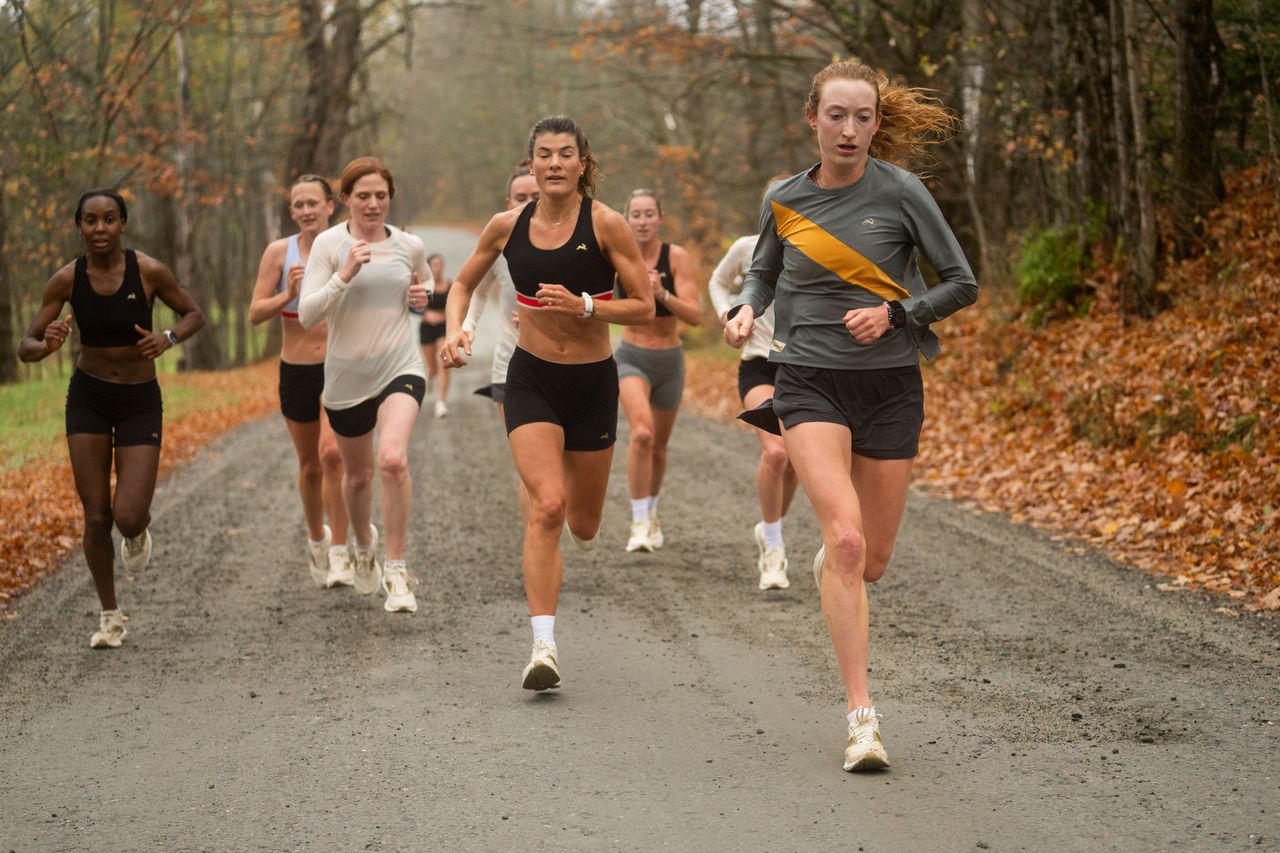
I recently had the opportunity to sit down with Steph Bruce and Elizabeth Chikotas of the Tracksmith Stamata, a women’s marathon team working toward a collective goal of qualifying for the 2028 U.S. Olympic Trials Marathon.
Bruce, 42, hardly needs an introduction. She’s a nine-time Trials qualifier who has already solidified her spot in the 2028 race. Based in Flagstaff, Arizona, she serves as Stamata’s team leader, providing mentorship, guidance, and encouragement for the 16 members that make it up.
Chikotas, 30, lives and trains in Salt Lake City, Utah, where she works as an engineer. She ran 2:34:29 at this year’s Boston Marathon, and qualified for the 2028 Trials last December at CIM, running 2:33:55.
In this conversation, which took place over Boston Marathon weekend, Steph spoke about how her involvement with Stamata came to be, her approach to navigating this phase of her career, and what it’s been like serving as a mentor for the women on the team. Elizabeth talks about what drew her to the program, the lessons she’s taken from working with Steph as her coach, where she hopes her relationship with running takes her over the next decade, and a lot more.
We didn’t have a ton of time for this one, but it was a lot of fun and full of applicable insights no matter where you are in your own running journey.
Mario Fraioli: Steph, the last time I saw you was CIM 2024. You ran a great race. And what was significant about that day is that it was the last race you ran under your previous sponsor. Fast forward a few months, you’re a free agent. I remember talking to you afterward. You weren’t exactly sure what was next, and now you’re working with Tracksmith and you are head of the Stamata program. Talk to me about how all that came to be.
Steph Bruce: Man, you just reminded me of what a cool 18 months that’s been. Yeah, I finished CIM in 2024, and I remember I ran pretty close to my PR—2:28—and I thought, OK, my daughter was 15 months old, maybe this isn’t the end for me. But it definitely took a different direction from a professional standpoint. At that moment I was thinking, “What does this next phase look like?” For so long, much of my career was about building my own brand—really big goals, trying to make Olympic teams, trying to win national titles. But then it was like, “In this next phase, who can I also help build? Who can I support alongside my own journey and bring along with me?”
I was fortunate to connect with Nick Willis. Nick and I knew each other on the running circuit. Our kids had actually hung out in Flagstaff when his family used to come for training camps. I remember following what he was doing when he transitioned from his pro career into Tracksmith and sports marketing. He essentially said, “I think we could have a unique role for you where you can continue to train and race and represent us as a brand, but also have the opportunity to delve into sports marketing and see the other side of the sport.” A few months into that partnership starting in 2025, the Olympic Trials Marathon standard was announced at 2:37, and we thought, “Okay, this is our moment, what do we want to do?”
The idea came: could we create a women’s marathon team chasing this goal? And instead of just waiting until the trials—like so many stories are told in those weeks and months leading up—could we tell these stories over the two and a half years of actually chasing it? Because so much of the story isn’t “Oh, you got it.” It’s “How did you get there?”
Mario Fraioli: Was there a foundation that had already been set by the brand or by you, like, “this is what this is going to be,” and then you figured out the name and who would be part of it and exactly what it would entail? Or was that just an evolving conversation?
Steph Bruce: Sort of. Nick had been in charge of the amateur support program back in 2019 and 2020. That was essentially: What about those athletes who are making USAs, making Olympic Trials, but can’t run full-time and aren’t contracted by any other companies? Can we get them to the trials? Can we support them and kind of be like their family? That was already existing under Tracksmith. Stamata was an evolution of that. The people who came to the trials through that program, it was incredible. There were 125 athletes in Tracksmith jerseys out on the roads in Atlanta and then in Orlando.
Mario Fraioli: It was wild in Atlanta. That was 2020, and it was that red, white, and blue kit, you could not miss it. I had eight athletes at that trials and I think six of them were in the Tracksmith kit, along with a hundred-plus others.
Steph Bruce: When people talk about a movement, they were a movement there. That was really special. But then with 2028 on the horizon, the question became: Can we have something that feels more like a team, more intimate, not just a collective of individuals showing up on the start line, but where we really know these women and can tell their stories? I think Stamata was an evolution of that, and I just got lucky with the timing. When I came into the company, they gave me the reins and said, “You can lead this team.”
Mario Fraioli: What’s cool about hearing that from you—we were just reminiscing before we got on the mics—is that in 2013 I was training with you for Boston in San Diego. You were in this weird limbo phase because you had just been part of another group, and you and Ben [Bruce] were trying to figure out what was next. That was your first Boston. Shortly after that, NAZ Elite came to be, and you were one of the charter members. You’ve always been very much a team person, part of a group of people collectively working toward something. And I mean, we don’t have to get into the end of your contract with Hoka or the end of your time with NAZ Elite, but it was this transition period where you had all of this experience and wanted to give back in some way.
And then, as the saying goes, luck favors the prepared. By chance, this opportunity comes up at Tracksmith and you get to take the reins and make this thing happen.
Steph Bruce: Absolutely. When people ask, “How did you know this is what you wanted to do?” I look back and think, “Well, I’ve always been giving unsolicited advice to my teammates, whether they wanted to hear it or not.” Part of my mindset and my experiences growing up was this belief that everyone deserves to have the most awesome life they want. In running, I could see people’s goals and what was holding them back and think, “Maybe if you did this, get off the track, move to the roads,” whatever it was. I was always telling my teammates what to do and what not to do. Some of them loved it and some were like, “We’re good.” So I think this was just naturally who I was, and it was fortuitous that it became a role I actually got to step into at Tracksmith.
Mario Fraioli: Feels like it was meant to be. Elizabeth, I don’t know you like I do Steph, but I know you competed in the 2024 Trials in Orlando before Stamata became a thing. Talk to me about when you heard about this program and why it was intriguing to you.
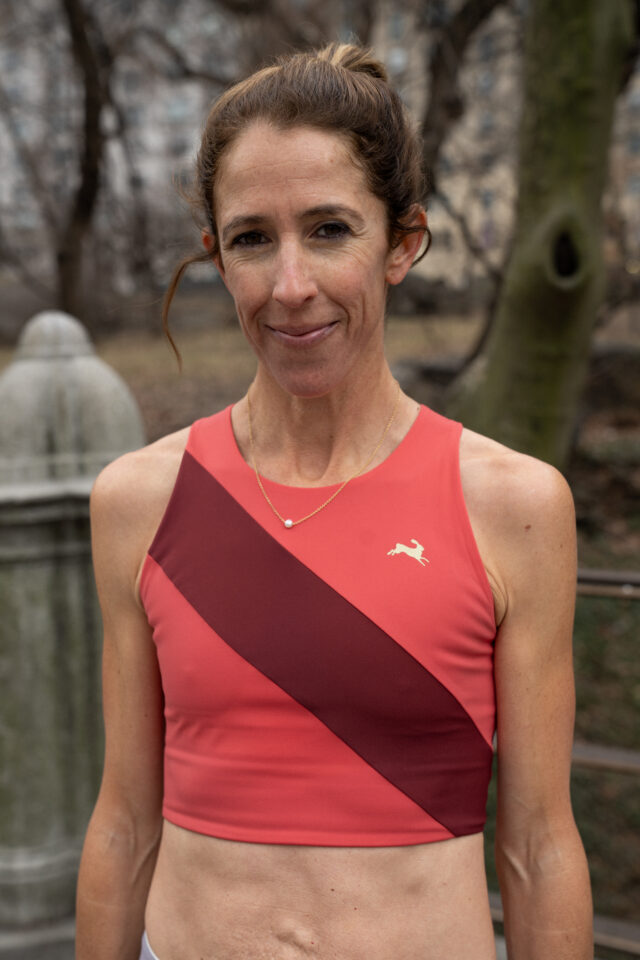
Elizabeth Chikotas: I’d always known Tracksmith as a brand that supported a lot of developing athletes, athletes who, like Steph said, work full-time but are still pursuing big goals. When I was at the 2024 Trials standing on the starting line, there were so many women in that Tracksmith kit, and I kept wondering, “What is this? Is this a team? How can I be part of this?” Then this past summer I saw an ad for the program on social media and was just so excited and honestly shocked, because it was exactly what I was looking for at the time. I had just moved to a new state, was starting to find a running community, but was also looking for a team, something to be part of.
Seeing Steph Bruce and Nick Willis leading the program was super exciting, because what better opportunity than to learn from people who have been to those big races and accomplished incredible things. So I applied, and I spent a lot of time on that application. I didn’t feel like it was ready to submit, so I kept waiting until the very last possible minute. Then I looked at the website and it was close to the deadline, a day before it was due, and there was a notice that they had closed applications because they had received too many. My heart just sank. But they had posted someone’s email—I think it might have been Nick’s—saying that if you still wanted to reach out, maybe you could be considered for something in the future.
So I emailed him, sent my completed application, and heard back from him the next day. I was able to make it through some of the final rounds, got to test out the shoes, and was really excited by the mission behind the team—how they wanted to help as many women qualify for the 2028 Trials as possible. I thought that would be an incredible thing to be part of. I found out I’d been selected at the end of the summer, around September, and then we all got to meet each other in Boston for the first time. Within 15 minutes of some of us getting together, we were just talking like old friends.
We had so much in common from a lot of shared experiences, running maybe from the time we were young, or from different stages in life. There are a lot of similarities in the group, but also a lot of differences, which makes it really interesting. You can learn from women who came to running from a completely different place. Maybe they didn’t start running cross country in seventh grade like I did, but they found it after they had their first child. You can see how running can fit into your life at all these different stages. I’m really happy to be part of this team.
Mario Fraioli: Coming off the 2024 Trials and before Stamata came onto your radar, you mentioned you had just moved to a new state. How were you thinking about your running and where you wanted to take it at that point?
Elizabeth Chikotas: At that point I had taken a year off from working full-time and was really trying to go all in on running at as close to a professional level as I could. I didn’t really have any support or know how to get that support. I’m in this in-between zone where I’m not fast enough to be pro, but I thought if I put in more training I could get there. I’m really grateful for my fiancé who was supporting me at the time. Stamata came to me at the moment when I most needed to connect with a group of women. Since then I started a new job, so I’m continuing with my career, but I still have those dreams and goals with running, and I feel like these other women are helping me keep that alive, especially when there are conflicting priorities and life gets tough and you have to make those decisions and sacrifices.
I know that running makes me feel the most like myself. It makes me feel like the best version of myself, and I’m glad I can continue to do that and be part of this team.
Mario Fraioli: Did you and Steph know each other before you joined the program?
Elizabeth Chikotas: No, we didn’t. But I remember being at the 2024 Trials and finding myself behind Steph for a lot of miles. There were so many people yelling, “Go, Steph!” It was a really rough part of the marathon where I was just holding on by a thread. I realized, “That’s Steph Bruce, oh my gosh, she’s right there.” Someone—I think it was her coach—asked how she was doing, and she said, “My legs are still moving, I’m still going.” That became my mantra to get to the finish line, because I was really struggling at that point. It was hot in Orlando, but I kept thinking, “I’m still moving forward. I can finish this thing.” So it was kind of a full-circle moment to later meet Steph and have her coach me.
Mario Fraioli: You just stole my thunder, because I heard right before we walked in here that Steph is coaching you. How did that come to be? I’d love to hear both of your perspectives on that.
Elizabeth Chikotas: I had been coaching myself through a few marathon builds until the end of last year, and I felt like I was ready for that next step, having a coach who would push me to go a little further, but also know when to hold me back so I wasn’t overdoing it too early, and just make sure I was making steady progression. Getting to work with Steph a little bit at the start of Stamata was super helpful. She gave me some workouts before CIM and helped me with the taper. So I asked her if she had any openings, and thankfully she did. It’s been a few months now and I’ve really enjoyed the coaching…some tough workouts, but also a good emphasis on rest and recovery and refueling, which is equally as important as putting in the hard work. It’s been great having you as a coach, Steph.
Steph Bruce: Thank you.
Mario Fraioli: Steph, what did you see in Liz as an athlete when you first started to get to know each other?
Steph Bruce: It’s been really cool getting to know each of the women on the team. With Elizabeth, we had some one-on-ones before CIM and I thought, “She really knows what she’s doing.” She’s very pragmatic about her training. I call her a student of the sport because she genuinely wants to understand why she’s doing certain workouts. She had everything really dialed in, so I feel like I just helped calm the nerves or confirmed that she was on the right track and that sometimes less is more. And when she mentioned holding her back, I think her biggest strength is that she has the ability to train like an animal if she wanted to. She’s very talented.
We got to see that at our training camp in Flagstaff back in February. I gave the team a workout—600, 400, 200—with set paces for each group. We’re at altitude, this is what we’re going to do, that sort of thing. Then for the last rep I said, “You can let it rip a little. This one’s on the road.” For the 400, I was thinking maybe she’d go 70, maybe 69. No. Elizabeth rips a 63 on the roads. I thought, “Okay, this woman has gas.” It’s exciting to see, but you can’t bring that out all the time or that’s how you burn out or get injured.
I just see ferocity and tenacity in her, and it’s about harnessing that and bringing it out at the right times in training and in races. I’m really excited for the next few weeks, the next few months, the next few years—her future is really bright.
Mario Fraioli: We’re tight on time with you, Steph, so I want to get this question in before you have to go. You’re essentially in this—and please take it in the most meaningful way it’s intended—mother hen role for this group of athletes. What has it been like to mentor these women who are trying to do something that you have done…well, I’ve lost count of how many times at this point?
Steph Bruce: Nine. I’ve qualified nine times. I don’t know, it feels natural because I am a mother. I have three children. Motherhood is very much a mirror for you in life. It really makes you examine how you’re conducting yourself in your own life. And this role does that for my own running too. Am I taking the same approach to training? Am I refueling? Am I doing all the things? I have this really cool opportunity, and sometimes it does feel like mothering because some of the women on the team are 22 or 23—they could be my daughters—but then we also have women my age. For those women, the message is: you have permission to believe you can do something you’ve never done before, and to let go of the imposter syndrome.
For the younger women, it’s take your time, don’t rush. You can have all the big dreams and goals you want, and you deserve to go after them, but enjoy yourself along the way. If people ask how my career has lasted so long, it’s because I’ve genuinely enjoyed every part of it. That’s helped me stay healthy, avoid burnout, and truly live what I’d call my dream job for 15-plus years competing.
Mario Fraioli: One thing I don’t want to overlook is that you’re still at this yourself. You’re as much a participant in this as you are in a mentorship role. What has that done for you at this stage of your career?
Steph Bruce: These women are so kind and gracious. At our training camp in Vermont, I was getting ready for New York and had one of my last hard workouts. Elizabeth and Libby weren’t sure what they were going to do, and I said, “Why don’t you just do the workout with me?” And they were like, “How are we going to do that?” But they don’t realize, Elizabeth was 15th at NCAA Cross. I was never 15th at NCAA Cross. Libby has run 15:30. Elizabeth ran 70 minutes in a half marathon in Utah. They had already done things that I had done, so again it was about giving them permission to think, “Why not you?”
What they do for me is show me that I can keep going too. Just because I’m aging and slowing down doesn’t mean my results aren’t valid for where I am in life. After 2024, after running CIM and having my daughter, instead of thinking, “That’s good for someone with three kids who’s 41,” I can just think, “That’s just good.” You don’t need an asterisk next to it.
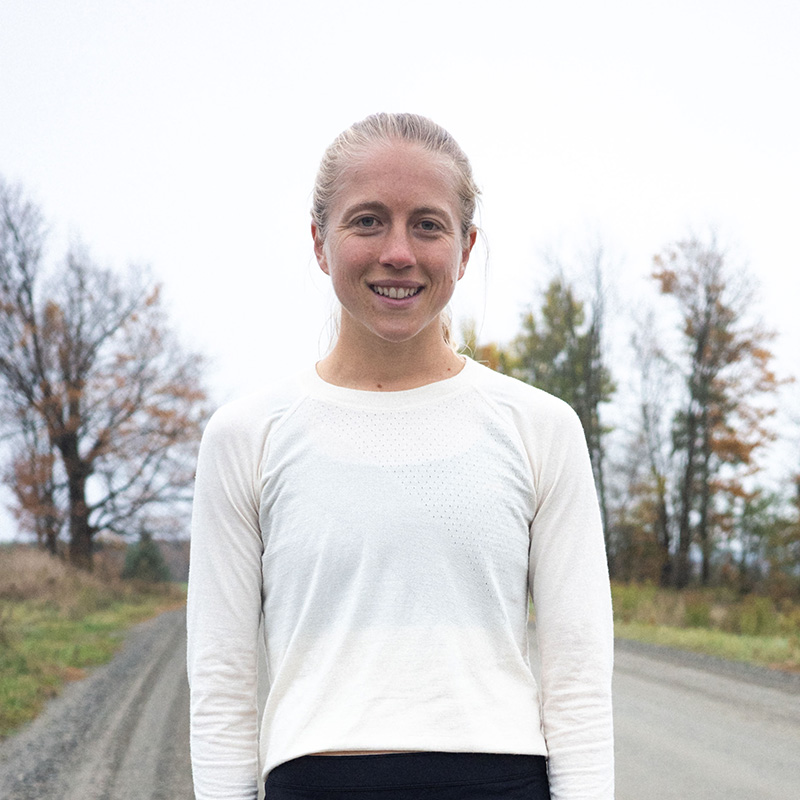
Mario Fraioli: So Liz, we were talking about your relationship with Steph as your coach. What have you learned from her specifically in the short amount of time you’ve been working together?
Elizabeth Chikotas: I feel like I’ve learned a lot from Steph. It’s hard to put it all into words when you meet someone who has been an idol, someone you’ve looked up to in the running world. She approaches running from a place where it’s something fulfilling her life. It’s not something to feel super anxious and nervous about, but it’s also not the end of the world if things don’t go well. There will be other races. Her resiliency is incredible. The fact that she’s qualified for so many trials over so many years is not luck. That’s because she’s put in the work outside of running: the strength training, the mobility, listening to her body.
That’s really difficult to do when you’re competing at your absolute maximum. It’s hard to fine-tune all of that. I think she’s an example of what you can accomplish when all of those things come together. I’ve learned that running and being competitive is something you can do for the long term. It’s not just limited to college or your early 20s. You can continue doing it, keep getting faster, and really have fun with it throughout your 20s and 30s and beyond.
Mario Fraioli: Steph mentioned a little while ago that you competed at a very high level at NCAAs, 15th at cross country, which, after the World Cross Country Championships, is probably the second most competitive race in the world. It is just unbelievably deep year in and year out. What was your relationship to competitive running like at that time?
Elizabeth Chikotas: That was probably the best race of my college season. I got really lucky that I was peaking at that moment. I had been running and competing in races since seventh grade, through middle school cross country and track. By the time I got to college, I had a pretty good handle on racing and what I needed to do to get the most out of myself. I put in a lot of work that summer because the previous year at Cross I had placed around 107th, pretty far back, and I knew going into that race that there was more in me, but I just hadn’t prepared the way I needed to.
So I spent a whole year thinking about it, which is a long time to be thinking about a race. I trained pretty hard that summer, came in in good shape, and two of my teammates were also chasing All-American status. We worked together a lot that season, and I credit being able to train with them for doing well at NCAAs.
Mario Fraioli: That doesn’t sound like luck to me. It sounds like you were very clear in your intentions: “I want to do a lot better next year,” and you put the work in to make it happen.
Elizabeth Chikotas: Yeah. And having teammates who push you to do that is so helpful. I think that’s part of why I finished higher than I expected. I remember just wanting to get top 40 and then finding myself in the top 20 and thinking, “I’m close, I have to kick and start picking off more people.” Ever since then, I think I’ve been searching for that, that team, those other women to run and train with and push each other. That’s one of the reasons I wanted to join Stamata.
Mario Fraioli: How were you thinking about your competitive running career at that point, having just had a great result at NCAAs? Did you want to continue and try to run professionally? Where was your head at?
Elizabeth Chikotas: I think I surprised my coaches with that race, but I didn’t really surprise myself, because I knew I had put in the work and that if I was fit, I could do well at that level. But a month later I got mono and was sick with a long, lingering case for over a year. After that I had some injuries. I fractured my sacrum, so I went from the highest high to the lowest low, which this sport will definitely do to you. I kind of put running on the back burner when I graduated. I wanted to focus on starting my career and have some time away from running, because I was really disappointed and sad with how things had ended.
But I always thought, “Maybe I’ll get back to it if I give myself time to heal and recover.” In 2023 I ran my first 10-miler in Charlottesville, held six-minute pace, and thought, “Could I do that for a marathon?” It seemed kind of impossible at the time. But I got that running bug again, started training, slowly built back up, and was feeling healthy and strong. That fall I ran my first marathon in Philly and qualified for the Trials there. I really lit that fire again running in Philly, which isn’t too far from my hometown.
Mario Fraioli: Did you look back at that 10-miler afterward and think, “In fact, I could run that pace for 16 more miles”?
Elizabeth Chikotas: It’s hard trying to think about what you could do in the future when the present seems so challenging. Anyone who’s been a runner and dealt with injuries has experienced that. When you’re getting back after an injury, it feels like you’re starting at square one and it’s a victory just to run two miles. But by putting in the work and going slow and listening to your body, you can build back up to where you were and maybe even better than you were before. I think runners have a lot of patience to be able to do that.
Mario Fraioli: For you at this stage of your career, does it feel almost like a second or third act, especially moving up to the marathon?
Elizabeth Chikotas: It feels like a completely different movie. Thinking back to college running, it feels like a different lifetime in a way. So yeah, maybe this is act two or act three. I know a lot more now. I think I know how to train myself and how to walk that line and hopefully not get injured again. I’m just having a lot of fun with it. Being an adult and having more autonomy over my training has been great, and working with Steph, she’s really flexible about tailoring the training to what I specifically need. That’s been really nice.
Mario Fraioli: To wrap this up, looking ahead five or ten years: One, what would you like your relationship with running to look like at that point? And two, what are some big goals you’d like to see yourself achieve?
Elizabeth Chikotas: I have a time goal of breaking 2:30. I think that would feel like getting to the next level. And I really just hope I can keep running and enjoying it and stay healthy. Consistent training, even if it doesn’t always look that impressive on paper, is probably the best path to running your best, rather than doing a huge training block and then getting hurt. Five or ten years from now, I’m hoping to train consistently, stay healthy, and just keep loving it and having fun with it. Because I think when that fun is there, when there’s not as much pressure, that’s when some of the fast times can come.